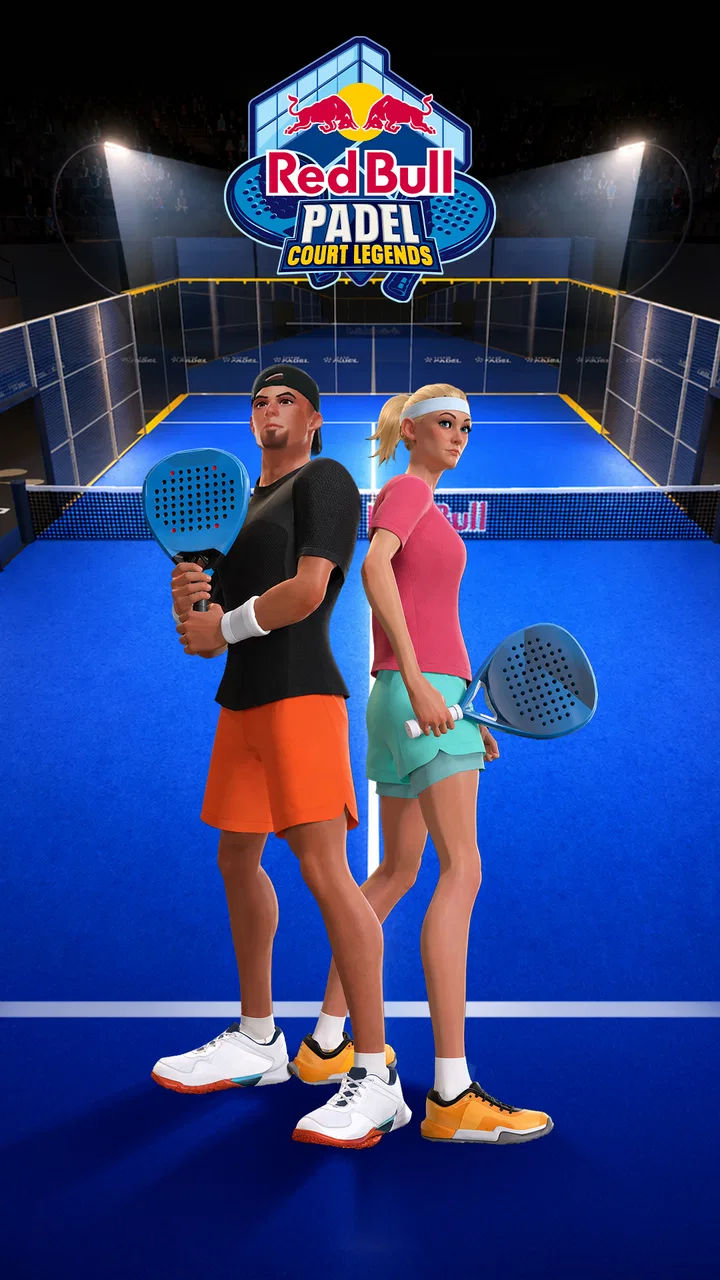
Red Bull Padel: Court Legends
- 4.7
- Rating
- 10.00K
- Installs
- Free
- Price

 Analysis by App-foxy
I approached Red Bull Padel: Court Legends as a sports game for short, focused sessions rather than as a full substitute for playing padel in person. Its appeal is easy to understand: it brings the sport into a mobile format, keeps the presentation centered on padel, and gives people a way to practise timing and decision-making when a court is not available. Red Bull is the developer, and the game is free to start, with optional purchases ranging from $0.99 to $59.99 per item.
What interested me most was not simply whether the game looked like padel, but how comfortably different people could read the screen, control the action, and return to it in different situations. A mobile sports game can be technically simple yet tiring for someone who needs larger visual targets, has limited hand movement, or plays with sound muted. My experience is that this title has a clear, approachable core, but its suitability depends heavily on how much control precision and sensory feedback you personally need.
How clearly the court communicates what is happening
The strongest part of the experience is its immediate identity. The court, the players, and the match context make sense as soon as I begin. I do not need to learn an unrelated fictional world before reaching the sport itself. That matters for casual players, younger users, and anyone who wants a quick game during a break rather than a long tutorial-heavy adventure.
You May Also Like

 AccuWeather: Weather Radar
AccuWeather Review: A Quick, Clear Forecast for Everyday Decisions
For everyday plans, the best forecast is the one you can understand quickly. AccuWeather makes rain timing, radar, and local conditions easy to act on, with a few trade-offs.

 Hill Climb Racing
Why Hill Climb Racing Still Turns Crashes Into One More Run
A tiny car, a bumpy hill and one more upgrade: Hill Climb Racing keeps resurfacing because its simple chaos makes every near-miss feel personal.

 AliExpress - Shopping App
AliExpress Makes Global Shopping Feel Personal, but Shoppers Bear the Risk
AliExpress turns a global marketplace into a pocket-sized discovery engine. Its reach is useful, its shopping loop compelling, and its trade-offs easy to miss.

 Lords Mobile: Kingdom Wars
Lords Mobile Is a Kingdom-Building Routine, Not a Quick Match
A case-by-case verdict on the building, battles, device demands, and social commitments that make Lords Mobile rewarding for some players and exhausting for others.

 PDF Scanner app - TapScanner
TapScanner Makes Paperwork Easier to Capture, Check, and Share
TapScanner makes scanning with a phone feel less like a rescue operation and more like a dependable step in getting work done. Its capture tools are useful, though not flawless.

 Block Blast!
 Shows How Much a Puzzle Game Can Leave Out
A quiet grid game shows why puzzle players increasingly value instant clarity, repeatable skill and low-pressure play—and where the genre still needs to catch up.
More From Our News Desk
View All News


The visual language is also useful for people who already know padel. The ball, net, court boundaries, and player positions provide familiar reference points, so an experienced player can connect the on-screen action with real movement around the court. Someone new to the sport may need a little more time to understand why a shot succeeds or fails, but the basic objective is much easier to grasp than in many sports games with complicated menus and layered rules.
Navigation feels best when I treat each session as a direct route into play. That makes the game suitable for a quick commute, a waiting room, or a few minutes at home. The trade-off is that anyone looking for a deeply organized training tool may find the presentation less useful than a dedicated padel coaching app or a real-world lesson. This is primarily a game, not a replacement for instruction.
For readability, screen size makes a real difference. On a larger phone or tablet, court spacing and player movement are easier to follow. On a smaller display, the same action can feel compressed, especially when several visual elements compete for attention. I found it helpful to hold the device steadily and avoid playing with the screen angled sharply away from me, because changing reflections or viewing angles can make fast movement harder to interpret.
The most practical readability tip is to play in a stable position with the display facing you directly. Sitting at a table or using a firm grip gives me more time to identify the ball path than playing one-handed while walking. That sounds obvious, but it changes the experience considerably. A game built around timing becomes much less forgiving when the phone is moving at the same time as the player.
Learning the rhythm without overloading the player
The game is easier to approach when I focus on one action at a time instead of trying to understand every possible outcome immediately. New players should watch the ball and the opponent’s position before worrying about perfect results. This creates a gentler learning curve and helps separate genuine mistakes from moments where the screen simply became too busy.
For experienced padel players, the main adjustment is that mobile timing is not identical to physical timing. In a real match, I use body position, racket preparation, peripheral vision, and the sound of the ball. On a phone, those cues are reduced or translated into screen events. That makes the game accessible in one sense, because it removes the physical demands of a court, but it also means the skills do not transfer perfectly back to real play.
I would not recommend relying on the game as a visual training aid for someone who needs highly detailed explanations of footwork, tactics, or shot mechanics. It can encourage interest in padel and offer a playful way to think about rallies, yet it does not replace a coach who can adapt instructions to an individual learner.
Motor control, sound, and sensory comfort
Mobile sports games often create an uneven experience for players with different motor abilities. A control system can feel effortless to one person and excessively demanding to another. With this game, the important question is not whether the controls are complicated in theory, but whether you can make accurate inputs while tracking a moving ball and reacting to changing positions.
I found that short sessions are more comfortable than extended play when precise touch or repeated gestures are tiring. A player with limited finger movement may prefer using both hands to support the phone, keeping one finger available for input rather than attempting to hold the device and control it with the same hand. This is a simple adjustment, but it can reduce accidental touches and make timing feel more consistent.
Players with tremors, reduced dexterity, or slower reaction speed may experience a sharper challenge during fast exchanges. The game’s sports focus naturally rewards quick responses, so a slower input does not always feel like a strategic choice; sometimes it simply arrives too late. That does not make the game unsuitable for everyone with a motor limitation, but it does mean the experience may be more enjoyable at a relaxed pace than in situations demanding constant precision.
One useful workaround is to treat the game as a sequence of readable moments rather than a test of continuous speed. I watch the opponent, anticipate the likely direction, and keep my hands ready before the ball reaches the critical point. This approach reduces frantic movement and is especially helpful for people who find rapid repeated touches uncomfortable. It also improves play for beginners because anticipation is more reliable than last-second correction.
Sensory comfort deserves equal attention. Fast movement, bright court visuals, and repeated impact effects can become tiring for players sensitive to visual motion. I would choose a well-lit room, keep the screen clean, and take breaks when the action begins to feel visually crowded. Playing in a dark room can make a bright display feel harsher, while outdoor glare can make important details disappear.
Sound can add atmosphere and help signal what is happening, but I would not make sound essential to the way I play. In everyday situations, such as a quiet office, public transport, or a shared room, I may need to mute the phone. That makes visual attention more important. Anyone who depends on audio cues should test the game in silent mode before deciding whether it is comfortable enough for regular use.
This is also where the game differs from a physical match. On a court, sound comes from several directions and helps establish distance. On a phone, the player receives a much narrower sensory picture. I enjoy the convenience, but I would not describe the mobile version as a complete sensory recreation of padel.
Who benefits from the mobile format
The reduced physical requirement is a genuine strength. Someone recovering from an injury, living far from a court, or simply unable to play outdoors can still engage with the sport’s basic ideas. The game also gives existing fans a low-commitment option between matches. I can explore a padel-themed experience without arranging equipment, travel, or another player.
It can work well for a family member who is curious about padel but not ready to step onto a court. The age rating is Everyone, which makes the game broadly suitable in terms of its stated audience. Even so, I would still consider the individual player’s comfort with touch controls, fast visual changes, and optional spending rather than assuming that an all-ages label guarantees an equally easy experience for every person.
For children, the free entry point makes trying it less complicated, but adults should still be aware that optional purchases are present. A child who enjoys the game may become interested in additional items, so device-level purchase controls and a conversation about spending are sensible. The presence of purchases does not prevent casual play, but it is part of the decision for families.
Playing in real-life situations
The game fits best into short gaps in the day. I can imagine opening it while waiting for an appointment, taking a few matches during a lunch break, or using it at home when the weather makes outdoor sport impractical. Because it is a mobile game rather than a court-based activity, it removes travel and equipment barriers immediately.
That convenience has limits. A crowded train is not the ideal place for a game that asks me to watch a moving ball and make accurate inputs. A phone held at an awkward angle, poor lighting, or constant interruptions can make the experience frustrating. If I am likely to be interrupted, I prefer a short session and avoid starting when I need to put the device away quickly.
Battery and connectivity habits also influence whether it feels practical, although I would not choose it as my only form of entertainment for a long trip without first testing how comfortably it runs on my device. The minimum operating system is iOS or Android 11, so anyone using an older phone should check compatibility before planning around the game. That requirement is reasonable for a modern title, but it excludes some older devices that still handle simpler sports games.
A realistic everyday use case is a recreational player who has just finished work and wants to stay connected to padel without booking a court. I might play a few rounds, think about positioning and shot selection, then stop before the session becomes repetitive. In that role, the game works as a small dose of sports entertainment. It is less convincing as a serious practice system because a phone cannot reproduce the physical movement, spacing, stamina, and communication of doubles play.
It is also worth considering posture. Holding a phone low for a long time can strain the neck and wrists, particularly when the player becomes absorbed in a close match. I get a better experience when I support my arms, keep the screen near eye level, and pause between sessions. This is not a special feature of the game, but it is an important part of using any touch-based sports title comfortably.
Where inclusion still meets friction
The biggest limitation is that the game’s central challenge is also its accessibility barrier: timing a fast sports action on a small screen. Without a clearly forgiving control option, slower reactions or limited dexterity can turn a potentially relaxing match into a sequence of missed inputs. Players who need simplified controls, extended timing windows, or alternative input methods may find that the game asks too much from their hands.
Visual clarity can also depend on the device. A newer, larger display may make the court easier to read than a compact or older phone. That creates an uneven experience between players, even when both devices meet the operating-system requirement. I would not buy a new device solely for this game, but I would test it on the phone I actually plan to use rather than judging it from screenshots.
There is a similar issue for people who play without sound. Muting a game is normal in many contexts, yet silent play can remove part of the feedback that makes quick sports action understandable. If the visual response is not enough for you to identify the timing of a shot, the game may feel less accessible in a library, workplace, or shared bedroom.
The free price is helpful for experimentation, but optional purchases create another point of friction. I prefer to play first and decide later whether anything extra adds meaningful value. A player who wants a completely purchase-free experience should be prepared to ignore those offers rather than treating them as part of the core reason to install the game.
Compared with a dedicated sports simulator, this title is easier to pick up but may offer less depth for someone who wants detailed tactical control. Compared with a real padel session, it is dramatically more convenient and physically undemanding, but it cannot provide exercise, court awareness, or the social element of doubles. Compared with a general arcade game, its padel identity is more specific, which is a benefit for fans but may narrow its appeal for players who simply want any quick sports game.
I would skip it if my priority were structured coaching, realistic fitness, multiplayer interaction in the same physical space, or highly customizable accessibility controls. I would also hesitate if fast touch reactions are uncomfortable for me. On the other hand, I would recommend trying it if I wanted a free, recognizable padel-themed game, had a compatible phone, and was happy to judge it as entertainment rather than training.
A welcoming starting point, with realistic expectations
Red Bull Padel: Court Legends is most successful when I use it as an easy doorway into mobile padel. It has a 4.7 average from around 1.3 thousand ratings, and its audience has already extended beyond a tiny test group, with over 10 thousand installs. The current version is 1.00.4, and the game arrived on May 27, 2026, placing it firmly among newer mobile releases rather than an established sports classic.
Those figures do not change the practical conclusion: the game is attractive for casual fans, curious newcomers, and players who want short sessions away from a court. Its Everyone age rating and free entry make the first step straightforward. The more important question is whether the player can comfortably follow quick visual action and make precise touch inputs.
My recommendation is to try it in the environment where I would actually play: with the phone supported, the display clearly visible, and sound either available or intentionally muted. I would begin with brief sessions, avoid judging my ability from the first match, and decide whether the controls feel manageable before considering any optional purchase. That approach also reveals whether the game suits my hands and eyes, not just whether I like the idea of mobile padel.
For inclusive use, I see a promising low-barrier concept rather than a universally effortless experience. It removes the need for a court and reduces physical demands, but it does not remove the challenges of small-screen reading, reaction speed, touch precision, and sensory comfort. If those trade-offs match what I need, this is a fun and focused sports game I can recommend to a friend. If I need extensive control customization or a true training substitute, a different option will serve me better.
FAQs for Red Bull Padel: Court Legends
01What is the primary objective of Red Bull Padel: Court Legends?
Red Bull Padel: Court Legends is a dynamic sports game that simulates the exciting world of padel. Players aim to climb the ranks by competing in matches, honing their skills, and unlocking legendary characters. The game combines realistic gameplay with arcade elements to create an engaging and competitive experience.
02Is Red Bull Padel: Court Legends free to play?
Yes, Red Bull Padel: Court Legends is free to download and play. However, it offers in-app purchases for items such as character upgrades, customizations, and special power-ups. These purchases are optional and designed to enhance the gaming experience, but players can enjoy the game fully without spending money.
03What platforms is Red Bull Padel: Court Legends available on?
Red Bull Padel: Court Legends is available on both Android and iOS platforms. Players can download it from the Google Play Store for Android devices and the Apple App Store for iOS devices. Ensure your device meets the necessary specifications for optimal performance.
04Does Red Bull Padel: Court Legends require an internet connection?
Yes, Red Bull Padel: Court Legends requires an internet connection to play. This is necessary for accessing multiplayer features, updating game content, and participating in events. While some elements can be played offline, the full experience is best enjoyed with a stable internet connection.
05Can I play Red Bull Padel: Court Legends with friends?
Absolutely! Red Bull Padel: Court Legends offers a multiplayer mode where you can compete against friends or other players globally. You can join matches, participate in tournaments, and even form teams. This social aspect enhances the competitive spirit and adds to the enjoyment of the game.
Pros
- Engaging multiplayer matches.
- Smooth and responsive gameplay.
- Regular updates with new features.
- Intuitive controls for easy play.
- Stunning graphics and sound design.
Cons
- Requires constant internet connection.
- In-app purchases can be expensive.
- Occasional server connectivity issues.
- Limited offline game modes.
- Battery drain during extended play.

Red Bull Padel: Court Legends
Gallery